Best Executive Carry-On Spinner for Boardroom Travel

Airports... they tell on you.
You ever sit in a lounge and just watch people roll in? Wheels clacking, bags wobbling sideways, some sad nylon thing slumping against a chair in the corner of the first-class lounge like it's had a long week. And suddenly - yeah - you realize the bag matters way more than you thought.
It's not just aesthetics. Not even close.
When you travel for work, your luggage is basically part of your gear. Like your laptop. Your watch. The shoes you walk into the meeting wearing. Lounges, conference check-ins, hotel lobbies... they squeeze a lot of strangers from a lot of industries into the same small space. People clock details without meaning to. Materials. Build quality. How smoothly someone moves through the airport.
A carry-on that glides quietly and opens fast says, "this person's done this before."
A bag that squeaks, tips over, or forces you to repack your entire life on the floor next to Gate B23... yeah. Different signal.
And if you're the kind of traveler who lands and goes straight to a client meeting? Then your luggage isn't just storage. It's part of the workflow.
Buyer Logic
- Full-grain leather carry-on spinner - Looks permanent. Feels like craftsmanship. Thick structured hides hold their shape even after years getting crammed into overhead bins.
- Aerospace-grade aluminum shell carry-on - Maximum rigidity, very commanding look, and built to survive repeated gate-check abuse.
- Virgin polycarbonate spinner with reinforced corners - Lighter option that flexes on impact instead of cracking.
Think of these less as materials and more like... three travel personalities.

Leather spinners are about touch and presence. Warm materials. They look right next to a tailored suit. Lawyers, consultants, finance people, design folks - people whose personal brand matters - often gravitate here. Downside? Weight. And leather doesn't love rain.
Aluminum cases lean the other way: mechanical confidence. They actually come from camera transport cases and diplomatic travel trunks - situations where gear got stacked, crushed, thrown around. They signal authority, sure, but they're also brutally durable.
Polycarbonate shells are the modern frequent-flyer choice. Lighter. Flexible. Engineered plastics that take hits and bounce back. If you're logging thousands of miles a month, shaving weight matters more than you'd think.
The Deep Dive
For anyone moving from airport straight to boardroom, carry-on size and mechanical precision make or break the experience.
The industry benchmark sits around 22 x 14 x 9 inches (approx 45 linear inches). Go bigger and you're gambling with forced gate checks on full flights.
That number isn't random. Overhead bins are built around very predictable shapes. Domestic routes mostly use narrow-body aircraft like Boeing 737 and Airbus A320 families, and their bins fill fast. Go even half an inch over spec and - if the flight's packed - gate agents may pull you out of line and check it.
Seasoned travelers quietly game this system.
A lot of them buy 21.5-inch cases instead of the full 22 inches. That tiny margin avoids all kinds of inconsistent airline enforcement.
It's one of those "you learn it after ten trips" things.

Material Performance Under Real Travel Stress
Materials aren't just about how the bag looks. They change how it behaves after years of abuse.
Take full-grain leather panels around 2.0mm thick. That thickness gives the bag structure. Even half packed, it keeps its shape instead of collapsing like soft nylon. And here's the interesting part: the fiber structure in full-grain hides stays intact because it isn't sanded down.
Which means over time leather actually work-hardens along fold points. It gets tougher, not weaker.
But yeah... leather has tradeoffs.
Leather carry-ons often weigh 10-20% more than synthetic equivalents, and leather absorbs moisture. Taxi in the rain? Humid airport? The bag can temporarily gain weight and eventually needs conditioning.
Now aluminum.
Most aluminum luggage uses 1.2-1.4mm anodized panels riveted to reinforced frames. It's incredibly rigid. Stack a pile of suitcases in a cargo hold - hundreds of pounds of distributed pressure - and aluminum holds shape better than most plastics.
But aluminum doesn't flex. It dents.
The dents rarely hurt the structure. They just... accumulate. Some people love that battered travel-trunk look. Others don't.
Then there's virgin Makrolon polycarbonate.
This stuff trims weight down to roughly 7-9 lb while still surviving drops and rough handling. Its molecular structure lets the shell absorb impact energy through elastic deformation. Translation: the suitcase flexes instead of shattering.
You've probably seen someone push on a suitcase and it bows inward - that's intentional.
During standardized drop tests from roughly 1 meter (approx 3.3 ft) - which simulates conveyor transfers - polycarbonate shells consistently bounce back without permanent damage.

Wheel Engineering: The Hidden Performance Variable
Here's where good luggage quietly separates itself from the junk.
Wheels.
Look for:
- Dual 360 degree spinner wheels with sealed steel ball bearings (each wheel usually rated for 20-25 kg load)
- Telescoping aluminum handles with less than 1 mm tolerance gap so they don't wobble
- External laptop sleeve engineered for 16-inch devices so security takes seconds
Wheel systems take insane abuse.
Every mile you roll through an airport means thousands of micro-impacts. Tile, carpet edges, escalator plates, expansion joints, concrete ramps... it's brutal. Cheap wheel housings eventually crack.
The better systems usually include:
- Polyurethane wheel tires (quiet, abrasion-resistant)
- Steel axle rods instead of plastic
- Recessed wheel mounts so curb hits don't snap them off
Quick test: if you can roll the bag with one finger across carpet, the bearings are good.

Handle Precision and Ergonomics
Handles seem trivial until they fail. Then they're all you notice.
Premium luggage uses multi-stage aluminum tubes with internal anti-rattle bushings. Cheap bags use thin steel tubes that loosen over time.
Once that happens, you get the dreaded wobble.
A tolerance gap under 1 millimeter keeps the handle stable.
Over hundreds of airport walks, that stability directly affects wrist fatigue and control - especially when you're navigating crowded boarding queues.
Internal Organization and Fabric Stability
Inside the bag, gimmicks don't help much. Structure does.
Good designs use compression panels, a suiter section, and a dedicated tech sleeve to keep clothes from sliding around.
The goal is keeping fabric movement under roughly 5% during transit. That number comes from garment transport testing in apparel logistics. Past that point, clothing starts forming visible crease lines.
Better interiors usually include:
- Floating compression panels spreading pressure evenly
- Divider walls with stretch pockets
- Removable laundry bags for worn clothing
Real-World Scenario
Picture a pretty standard consulting trip.
Monday morning flight. Taxi straight to the client office. Presentation two hours after landing.
A carry-on with external laptop access, wrinkle-resistant packing panels, and silent wheels quietly removes several annoyances:
- No digging for electronics at security
- No wrinkled suit emergency-steaming in a hotel bathroom
- No loud wheel rattling when you roll into a quiet office
Each thing is small. Together... they make travel feel easy.
In practice, this category blends presentation with efficiency. Leather and aluminum cases look perfectly at home next to tailored suits and polished Oxfords. Meanwhile properly engineered spinner wheels glide across marble airport floors almost silently.
Small detail. People notice.
So the core checklist is simple: 22-inch carry-on compliance, sealed spinner bearings, tight-tolerance telescoping handles, and quick-access tech storage.
Choose this if you want a bag that moves cleanly from airport lounge to client meeting. Skip it if you prefer soft duffels that squish into tight spaces.
Compare other business travel luggage options here.
See all our leather carry-on luggage here.
Best Full-Grain Leather Weekender for Leisure Retreats

Weekend trips hit differently.
No suit carriers. No rigid shells. Just a really good leather bag tossed into a car trunk... or sitting in the corner of a cabin... or shoved under a boutique hotel bench.
This whole category exists because not every trip benefits from wheels.
Sometimes the bag only gets carried from the house to the car... then from the car to the room. In those situations, the tactile pleasure of leather matters more than mechanical engineering.
And honestly? A good leather weekender becomes a travel companion.
Synthetic bags just wear out. Leather does something else - it records the trip. Little marks. Sun fading. Darkened handles from years of use.
Buyer Logic
- Vegetable-tanned full-grain leather weekender (1.8-2.5mm thickness) - Develops visible patina over time. Travel wear becomes character.
- Waxed canvas and leather hybrid duffel - Lighter and better in bad weather.
- Structured leather holdall with brass hardware - Keeps its shape even when half packed.
This category basically boils down to one tradeoff: Weight vs character.
Leather weekenders usually weigh 4-6 lb empty. Heavier than nylon, yes - but far more durable and visually distinctive.
Waxed canvas hybrids sit closer to 2.5-4 lb, which helps if you're carrying the bag longer distances.

The Deep Dive
Leather weekenders really shine for 2-3 day trips where style and feel matter more than rigid protection.
The sweet spot for width sits around 55 cm (approx 21.6 inches). That gives about 40-50 liters of usable capacity.
Which fits:
- Two or three clothing changes
- A second pair of shoes
- Toiletry kit
- Laptop or tablet
Go bigger and the weight climbs fast.
Once the bag hits 15 lb on the shoulder, comfort drops off quickly. Human ergonomics studies show single-shoulder loads exceeding 15-18 lb start messing with posture during longer walks.
That's why good weekenders usually include both shoulder straps and dual carry handles. You switch grips when your shoulder gets tired.

Understanding Leather Quality Beyond Labels
Leather quality matters here more than almost anywhere else.
Vegetable-tanned leather is processed using plant tannins over weeks. That slower process preserves the hide's natural fiber density.
Which is exactly what allows leather to absorb oils and sunlight over time and create that deep uneven color shift people call patina.
Vegetable tanning usually takes 20-60 days. Compare that with chrome tanning, which finishes in 24-72 hours.
That extra time lets tannins fully penetrate the hide's collagen fibers, improving structural stability long term.
Chrome-tanned leather can look similar on day one... but after several years it often cracks or peels.
A quick in-store test:
- If the leather feels slightly firm and smells earthy, it's probably vegetable-tanned.
- If it feels very soft and chemically neutral, it's likely chrome-tanned.
Hardware Durability
Hardware should last as long as the leather.
Reliable builds usually include:
- Solid brass rivets at stress points
- #8 or #10 metal zippers (YKK standard)
- Cotton canvas interior lining around 12-16 oz weight
Brass works well because it oxidizes slowly instead of corroding. Over decades it darkens into an antique finish that pairs beautifully with leather patina.
Cheap bags often use plated zinc alloys, which eventually chip and expose dull gray metal underneath.

Packing Strategy and Structure
Leather duffels carry differently than synthetic ones.
The bag stands upright while you pack it. The handles feel dense in your hand. And after a few years the leather softens along fold lines - kind of like breaking in a leather jacket.
Experienced travelers often pack like this:
- Shoes along the base
- Rolled clothing along the sides
- Toiletries in the center to balance weight
That structure keeps the bag from sagging in the middle.
So the formula ends up pretty clear: 40-50L capacity, vegetable-tanned full-grain leather, metal zippers, brass hardware.
Choose this if you care about craftsmanship and character. Skip it if you need wheels or strict carry-on structure. If you can't decide on the right weekender, we compare the best leather duffle bags for travel in this article.
Best Garment Bag for Wrinkle-Free Business Attire

There are few worse travel moments than this one.
You unzip your bag ten minutes before a meeting... pull out your suit... and the shoulders are crushed. Lapels creased. Trousers folded like origami.
Now you're hunting for an iron.
Wrinkles during travel really come down to two things: fabric tension and movement. Clothes wrinkle when fibers get bent sharply and stay that way long enough to set the crease.
Garment bags try to solve both problems. They reduce bending angles and limit fabric movement.
Buyer Logic
- Leather garment holdall with integrated hanger system - Protects suits while also working as a travel duffel.
- Tri-fold garment carrier with structured panels - Best option when carrying multiple suits.
- Hybrid garment duffel (suit section + casual storage) - Formalwear protection plus normal luggage space.
Different shapes for different trips. Tri-fold carriers work best for multiple suits and formal events. Garment duffels work better for single-suit travel plus extra clothing.

The Deep Dive
Older garment bags just hung vertically. Modern travel leans toward folding holdalls that combine suit storage with regular packing space.
The key metric is fabric stability during movement. Better garment bags use hanger loops and compression straps to keep clothing shifting under 5% movement during transport.
Less movement = fewer creases. Typical compartments fit 1-2 suits up to size 46R, with interior widths around 54-56 cm.
That width matters because it lets jackets fold along their natural seams instead of forcing new crease lines.
Folding Physics
If you've ever watched how high-end stores fold suits, you've seen the trick:
- Jacket folded shoulder-to-shoulder
- Sleeves tucked inward
- Trousers folded once at the knee
You end up with three gentle folds instead of sharp creases. The suit survives the trip.

Construction Details
A few build details really matter:
- Soft structured leather or ballistic nylon exterior spreads pressure when folded
- Interior hanger bracket or removable hanger system holds garments at the collar
- Full-length garment zipper prevents bunching while packing
Ballistic nylon - often 1050D weave - is popular because it spreads compression forces and resists abrasion.
Shoes and Accessories
Many garment holdalls also include shoe compartments and accessory pockets. Which... honestly... matters more than people think. Showing up with polished shoes is part of the overall look.
Separate shoe sections also stop sole dirt from transferring to garments, which is a surprisingly common packing mistake.
For conferences, weddings, investor meetings - situations where appearance counts - garment holdalls remove the last-minute hotel ironing scramble.
The formula is straightforward: structured exterior, hanger-anchored garment section, enough width for natural suit folds.
Choose this if wrinkle-free tailoring matters. Skip it if most of your wardrobe travels wrinkle-resistant.
Learn more about how to pack a suit into your carry-on here. Compare other garment bags for business travel here.
Best Hybrid Travel Bag for the Pragmatic Frequent Flyer

Some trips refuse to stay simple. Morning flight. Afternoon train. Evening client meeting. Three different transportation systems before dinner.
This is where hybrid bags make sense. Because wheeled luggage... honestly... struggles in dense cities. Subway stairs, cobblestones, buses, tight escalators - those little spinner wheels hate all of it.
A hybrid bag lets you switch carry styles depending on where you are.
Buyer Logic
- 3-in-1 convertible backpack / messenger / briefcase - Handles crowded transit and still looks professional.
- Expandable travel backpack (21L to 28L) - Slim profile that expands for the return trip.
- Tech-focused carry-on backpack with luggage pass-through - Built around laptops, chargers, documents.
The tricky part here is balancing professional appearance with comfort. Many backpacks look too casual. Traditional briefcases look professional but become miserable to carry all day.

The Deep Dive
Hybrid bags exist because cities aren't built for rolling suitcases. Subway stairs. Cobblestone streets. Narrow train aisles.
Capacity usually starts around 21 liters, which holds a laptop, tablet, documents, and a change of clothes. Expansion zippers bump that up to about 28 liters, which helps when you bring things home from the trip.
Ergonomics
Backpack straps should include:
- High-density EVA foam padding
- Breathable mesh backing
- Load lifter straps
Bad straps dump all the weight onto your shoulders instead of distributing it across your back.
Carry Flexibility
Good hybrids offer multiple carry modes:
- Hideaway backpack straps tucked behind zip panels
- Detachable shoulder strap for messenger carry
- Side handles for briefcase carry
Switching modes during a long travel day actually reduces fatigue.

Tech Organization
Tech storage is what makes these bags usable. Standard setups include:
- Padded laptop compartment for 15.6-16 inch devices
- RFID shielded document pocket
- Rear luggage strap for stacking on rolling suitcases
A good internal layout also lets you grab chargers and cables without digging through the main compartment. The tradeoff is simple though. Hybrid bags sacrifice clothing space. They're best when your trip mixes commuting, meetings, and maybe one overnight stay.
In other words: adaptability, moderate capacity, structured professional design.
Choose this if your day includes trains, taxis, and meetings.
Avoid it if you need serious clothing capacity.
Learn more about the differences between a carry-on and a personal item here.
Best Heavy-Duty Checked Trunk for International Transit

Every frequent traveler eventually experiences it. Catastrophic luggage failure. A wheel snaps. A zipper bursts. The shell cracks halfway through a long trip.
Once that happens... you start caring a lot about luggage construction.
Because checked baggage lives in a rough world most travelers never see. Behind the scenes you've got high-speed conveyor belts, stacking loads, and automated sorting machinery.
Suitcases regularly endure:
- Drops of 1-1.5 meters
- Stacking loads exceeding 200-300 lb
- Sudden directional impacts during conveyor transfers
Trunk-style luggage exists specifically to survive this.
Buyer Logic
- Zipperless polycarbonate trunk with latch locks - Removes zipper failure completely.
- Riveted aluminum trunk suitcase - Maximum structural rigidity.
- Reinforced polycarbonate trunk with corner guards - Strong but lighter.
The Deep Dive
Checked luggage gets handled aggressively. Conveyor drops, heavy stacking, baggage carts - it's rough. Trunk suitcases fight this with structure. Most offer 80-100 liters of capacity and use a 30/70 lid-to-base split.
That deeper base lets bulky items - shoes, jackets, equipment - sit comfortably without crushing the lid.
Why Zippers Fail
Zippers are usually the weakest part of luggage. They fail because teeth separate under pressure, fabric tape stretches, or slider mechanisms wear out.
That's why latch-based closure systems with integrated TSA locks exist. No zipper. No zipper failure.
Material Selection
Materials change both durability and weight.
- Virgin Makrolon polycarbonate shells flex on impact and bounce back.
- Aluminum trunks with riveted corner guards resist crushing but weigh more - often 12-15 lb empty.
Polycarbonate trunks usually weigh 30-40% less than aluminum ones.
Wheel Systems
Wheels also need to scale up. Good trunks use large-diameter dual spinner wheels (50-60mm) with reinforced housings. These support suitcases packed beyond 25 kg. Larger wheels roll better across asphalt, curbs, and uneven pavement.
For long international trips - multiple flights, two weeks abroad - reliability matters more than aesthetics. A well-built trunk protects everything inside and keeps working.
So the checklist becomes simple: 80-100L capacity, latch closure system, reinforced shell material, heavy-duty spinner wheels.
Choose this if you frequently check luggage on long international trips. Skip it if you mostly travel carry-on only. Learn more about business travel here.
Product Comparison Table
| Category |
Best For |
Key Material |
Laptop Capacity |
Carry-On Compliant |
Price Tier |
Warranty Length |
| Executive Carry-On Spinner |
Boardroom travel |
Full-grain leather / aluminum / polycarbonate |
Up to 16" |
Yes |
Premium |
5-10 years |
| Leather Weekender |
Leisure and weekend trips |
A-grade full-grain leather, drum-dyed so the colour goes right through the hide |
Optional sleeve |
Yes |
Premium |
5+ years |
| Garment Holdall |
Wrinkle-free suits |
Structured leather or ballistic nylon |
Up to 15-16" |
Usually |
Premium |
5+ years |
| Hybrid Travel Bag |
Frequent commuter travel |
Ballistic nylon / reinforced polyester |
Up to 16" |
Yes |
Mid-Premium |
3-5 years |
| Checked Trunk |
International trips |
Polycarbonate or aluminum |
No |
No |
Premium |
5-10 years |
How We Evaluated & Why You Should Trust Us
Luggage failures tend to happen in the same places over and over again. Wheels. Handles. Materials. So testing focuses on those exact points.
- Handle wobble testing: telescoping handles measured for lateral play. Premium systems keep less than 1 mm movement under load.
- Wheel friction testing: sealed bearings rolled across rough surfaces and carpet to measure drag resistance.
- Material abrasion testing: leather and polycarbonate surfaces rubbed against textured materials to simulate baggage handling wear.
- Zipper tensile testing: metal zippers pulled under load to measure strength and snag resistance.
There's also load cycling tests. Bags get packed nearly full, then rolled over mixed surfaces for several kilometers. It compresses months of airport walking into a short window.
One other thing matters more than people think: visual context. Executive luggage has to feel normal in messy travel environments - but also look completely natural next to tailored clothing in formal spaces. A bag that looks great in an airport but awkward in a client office misses the point.
The evaluation process also draws heavily from traditional leathercraft standards - knowing how to spot bonded leather vs full-grain hides, and recognizing construction techniques meant to survive decades of use.
How To Choose Your Luggage
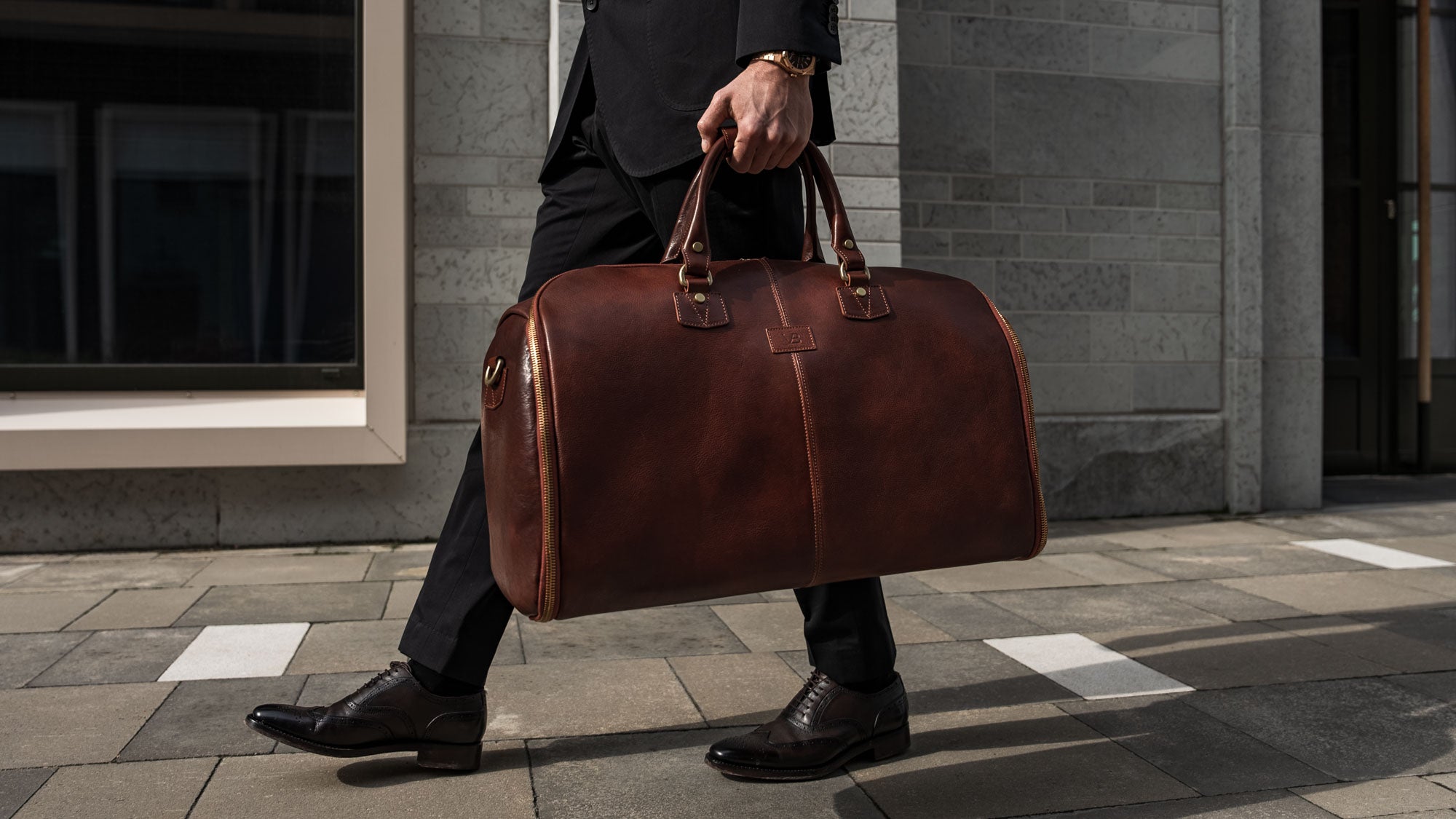
Material Authenticity & Longevity (The True Cost of Fast Fashion)
Leather quality determines how long the bag lives. Full-grain leather keeps the hide's top layer intact. That preserves the natural grain and dense fiber structure. Vegetable-tanned hides typically measure 1.8-2.5 mm thick, which makes them resistant to cracking or peeling.
Lower-grade leather types include:
- Top grain: sanded surface; smoother but less durable.
- Genuine leather: heavily processed layers from leftover hide pieces.
- Bonded leather: shredded leather fibers glued together.
Bonded leather can contain as little as 10-20% real leather fiber. Which explains why many cheap bags fall apart quickly.
Vegetable tanning uses plant extracts - oak, chestnut, mimosa - and takes several weeks. The result is leather that darkens slowly and develops patina. Chrome tanning happens in days, but you trade away longevity and environmental safety.
Hard-shell materials involve different tradeoffs:
- Aluminum: extremely rigid but heavier.
- Polycarbonate: lighter and impact-flexible.
Hardware Integrity & Construction Quality
Hardware decides whether the bag survives years of travel. Look for:
- Solid brass or stainless steel hardware instead of plated zinc alloys
- YKK #8 or #10 metal zippers
- Reinforced stitching with high-tensile nylon thread
Premium bags often use bar-tack reinforcement stitching, the same method used in climbing harnesses and military gear. Interior linings should be cotton canvas, microfiber, or taffeta, which prevent abrasion against clothing or electronics. Cheap hardware usually fails first. Broken zipper teeth. Loose rivets. Snapped clips.
Softshell vs. Hardshell: Which Is Better for Your Itinerary?
This mostly depends on how you travel.
Softshell luggage (leather, waxed canvas, ballistic nylon):
- Flexible packing space
- External pockets
- Great for car travel or private aviation
Hardshell luggage (polycarbonate, aluminum):
- Better protection for fragile items
- Strict carry-on dimensions
- Performs better in airline baggage systems
Most professionals end up with both: a carry-on spinner for flights and a leather weekender for leisure trips.
Capacity, Dimensions, and Organization Needs
Trip length determines volume. Typical benchmarks:
- 21-30L: daily commuter or hybrid work bag
- 40-50L: ideal for 2-3 day travel
- 80-100L: extended international trips
Organization matters more than people expect. Look for:
- Separate shoe compartments
- Compression straps to stop clothing movement
- Dedicated laptop sleeves for quick security access
A well-organized bag makes packing easy. That alone can make travel feel smoother.
The True Cost of Luxury: Direct-to-Consumer vs Retail Markups
Traditional luxury luggage often carries 300-500% retail markup. Why? Wholesale distribution, storefront rent, retail staffing - the usual overhead. Direct-to-consumer brands skip that layer. That usually means the budget goes toward better materials, longer warranties, and stronger hardware. If you care about long-term value, material quality matters far more than logos.
Personalization and Gifting
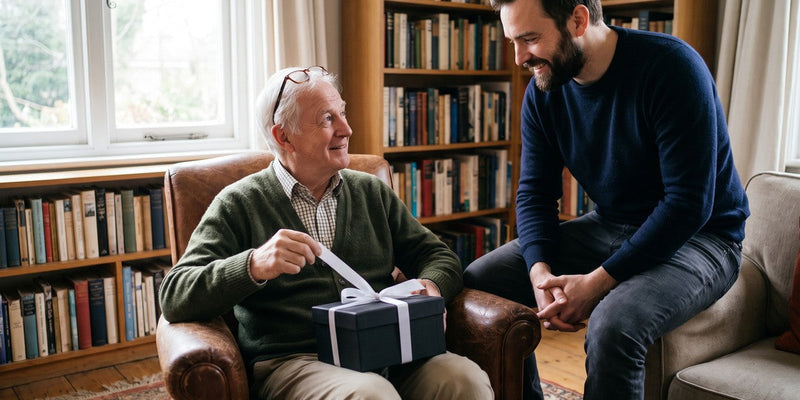
Adding personalization turns luggage from equipment into something more personal. Common options include blind embossing on a luggage tag or heat-stamped monograms, usually 2-4 initials.
People often buy personalized luggage for:
- Career milestones
- Retirement gifts
- Wedding or anniversary trips
Then the years pile on. The bag picks up scuffs, travel stickers, darker leather where your hands grip the handles. Little physical reminders of airports, cities, hotels... a life spent moving around the world.
FAQs
What size luggage is best for a 3-day business trip?
Usually a 22-inch carry-on spinner or 40-50L weekender. That's enough space for one suit, casual clothes, shoes, and toiletries - and you skip baggage claim entirely. If you pack efficiently, packing cubes can increase usable space by 15-25%.
Is full-grain leather luggage too heavy for air travel?
Not really, if the bag is sized correctly. Most leather weekenders weigh 4-6 lb empty, which stays comfortable for the short walking distances typical during weekend travel.
How do I keep my suit from wrinkling in a carry-on?
Use a garment holdall with a hanger system, or pack suits inside dry-cleaning bags inside structured luggage. The plastic from dry-cleaning bags reduces friction so fabrics slide instead of creasing.
What is the difference between vegetable-tanned and chrome-tanned leather luggage?
Vegetable tanning uses natural tannins over weeks and creates leather that develops patina and lasts decades. Chrome tanning uses chemical salts for faster production but tends to produce leather that deteriorates sooner.








Your email address will not be published.