How can we be sure the leather in this gift is truly full-grain or top-grain, and not a cheaper bonded alternative that won’t last?

Okay, so here’s the thing - leather isn’t all the same. People throw words like "genuine" or "authentic" around like it means anything... and it doesn’t. That’s where people get burned. If you’re picking a gift, the actual grade of leather is what decides if he’s carrying this thing for 20 years or binning it in two.
Full-grain? That’s the big one. It’s the whole top layer of the hide, cut to around 1.0-1.2 mm in a good wallet and 1.4-1.8 mm in a bag. Every pore and wrinkle of the natural grain is still in there, which makes it tough as nails. We’re talking 15-20 years of use before it even thinks about giving up. And it keeps its refined look as it ages, softening just enough that it starts to feel... his. That's why we use it here at Von Baer.
Top-grain’s the slightly worse version. Still legit, just sanded down. You’re in the 1.2-1.6 mm range, it looks smoother, feels a bit softer. Lasts a solid 8-12 years. Loads of designer houses use it for bags because it’s refined but not fragile, but it's worse than full-grain.
Bonded? Nah. That’s literally scraps and dust mashed together with glue, painted over with plastic. Might look good out of the box, but give it six months and it’s peeling like a cheap sofa. Life expectancy? 1-2 years, tops.
Trick to check: look at the edge if you can. Fibers showing? That’s real. Perfectly sealed and plasticky? That’s fake. Bend it - if it wrinkles a little, you’re good. If it just bends smooth, walk away.
We use full-grain, no exceptions. A-grade hides only, cut from the bend where the fibers are densest, with bites and scars turned away. That’s the stuff you want to give.
...Anyway, once you’re sorted on that, the next question is: do you want this thing to be something he actually uses day-to-day, or something a bit more of a showpiece?
Which of our leather pieces strike the right balance between practical everyday use and a timeless luxury feel?

This is where people overthink it, honestly. But also... get it wrong. Too practical? Feels boring. Too fancy? He sticks it on a shelf. You’ve got to find that sweet spot.
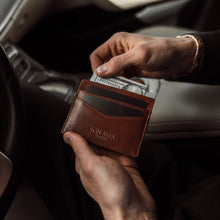
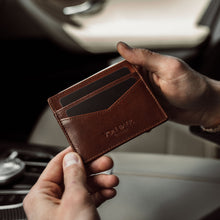
Wallets and cardholders - safest bet. A bifold’s usually 4.5 x 3.5 inches, cardholders are slimmer, like 4 x 2.8 inches, and hold 4-6 cards. Thing is, he’s pulling it out dozens of times a day, so it wears quick. You’ll see patina in 6-9 months easy. But, gifting a wallet can sometimes feel like socks at Christmas, you know? Solid, not exciting.
Briefcases or laptop bags? That’s where prestige kicks in. One sized for a 15-inch laptop (15 x 10 x 2.5 inches) with reinforced handles that take 15-20 lbs without stress - that’s serious kit. If he’s walking into meetings, it sends a message. Downside? You’re looking at $900-2000 territory, so you need to know he’ll actually carry it.
Dopp kits and duffels... now we’re talking middle ground. A dopp’s around 9 x 5 x 4 inches, just the right size for TSA bottles. Duffels are 20-24 inches long, 30-45 liters capacity - weekend trip sorted. They’re indulgent but useful.
Desk stuff? Like trays (8 x 8 inches) or mats (24 x 14 inches). Feels subtle, not in-your-face. Smart option for bosses or colleagues, because it’s practical without being too personal.
So, here’s the hack: walk through his routine in your head. If he’s a wallet-keys-phone guy, don’t hand him a giant duffel. If he’s on planes every week, a dopp kit will get used non-stop. Wrong match = gift collecting dust.
...Now, let’s say you’ve nailed the category. The next bit is the fun part: how do you make it his?
How do our personalization options (initials, dates, embossing) elevate this gift into something emotional and memorable rather than just functional?

Leather’s great. Leather that’s been personalized? Different level. That’s the move that takes it from "nice" to "this was made for me."
We do a few types:
-
Blind embossing. That’s just pressing the leather - about 0.3-0.5 mm deep - no color added. Super subtle. Great for initials on a briefcase or dopp kit.
-
Foil stamping. Heated up to 220-250°F so the foil bonds in. Gold or silver. Flashier. Good for things he’ll flash around like a wallet or cardholder.
-
Inside embossing. Discreet, 0.25-inch letters, fits maybe 15 characters. Anniversary date, private message, whatever. Hidden until he opens it.
And you’ve got to think about placement. Outside is bold - colleagues see it. Inside is intimate - just him. That choice matters.
Skip this, and you’ve got a nice wallet. Do it, and suddenly he’s carrying something with his anniversary date pressed in it. Way more powerful.
...And then you start wondering, okay, what happens when he’s been carrying it for years?
Will the leather’s quality actually improve with age, developing a patina that feels more personal the longer it’s owned?

This is the part I geek out on. Real leather doesn’t get worse with time, it gets better. Wallets soften, bags darken, scuffs become stories.
Couple things decide how it ages:
-
Tanning. Veg-tan takes 30-60 days dunked in tannin baths, comes out ready to soak in oils and age beautifully. Chrome-tan is quick - 1-3 days with chromium salts - bright colors, but patina? Not so much.
-
Finishes. If someone slaps on a heavy 0.1 mm polyurethane coat, that leather is basically sealed in plastic. The natural grain disappears. We keep coatings light.
-
Color. Light tan goes from beige to caramel in 12-18 months if he uses it daily. Black? Doesn’t really change color, but develops sheen over 2-3 years.
-
Use. Patina’s all about friction, oils, light. Wallet in his pocket? Changes in 6 months. Dopp kit? Maybe a year. Briefcase? Two, unless he’s dragging it around daily.
Tip: if you want it to "grow with him," get veg-tanned, light-colored leather, and make sure it’s something he’ll handle a lot. If you want it subtle, black or dark brown keeps that professional vibe.
If you mess this up and buy coated leather, it just cracks. Doesn’t become his, doesn’t tell a story.
...So now the question becomes: which thing actually fits his life stage?
Which product categories best align with his stage of life and professional setting?

This is where you’ve got to read the room. Wrong product for the wrong stage = awkward.
Briefcases and laptop bags? That’s for someone with a 13-15 inch laptop, carrying A4 docs (8.5 x 11 inches) every day. Management types, client-facing roles. Check the handles - good ones are tested for 20,000 flex cycles without breaking. Creative guy? Go messenger style, strap drop 18-22 inches so it’s slung across instead of formal.
Wallets and cardholders? Universally useful. Slim cardholder at 0.25-0.4 inches thick, fits 4-6 cards. Minimalist, suits younger guys in the city. Full wallet at 0.5-0.75 inches, 8-12 cards plus cash. Upgrade only works if his current one’s looking rough.
Dopp kits and duffels? Kits with 2-3 liters capacity and waterproof linings save him from shampoo explosions. Duffels? 20-22 inches long, under 3 lbs empty, 30-45 liters capacity. Perfect for weekend trips or gym bags.
Desk accessories? Trays at 8-10 inches, mats at 24 x 14 inches. Low-risk, looks sharp. Safe choice if it’s a boss or someone who’s already got everything.
Tip: actually picture how he lives. If he bikes to work, a hard briefcase is useless - get him a duffel with a padded strap. If he’s got a slim MacBook, a 14 x 10-inch folio does the trick instead of a bulky case.
...And once you’ve figured out the right category, you can’t forget about the thing that separates heirlooms from landfill: craftsmanship.
What specific craftsmanship details in our leather goods (hand-stitching, tanning process, finishes) make them stand apart as worthy heirloom gifts?

This is the sneaky bit - what you can’t see in photos is exactly what makes or breaks the gift. Two wallets might look the same, but one’s going to last 20 years, the other six months.
-
Stitching. Hand saddle-stitching - two needles, each hole crossed - means if one thread snaps, the seam stays. Density should be 7-9 stitches per inch for wallets, 5-7 per inch for duffels. Machine lock-stitch? Cut one thread and the whole seam unravels. If it looks machine-perfect, it probably is.
-
Dyeing. Drum-dyed leather takes the color right through the hide; surface-dyed leather keeps it in a thin skin that flashes pale at every scuff. We stick with drum-dyed for heirlooms.
-
Edge finishing. If edges are raw, they fray in 6-12 months. We use a three-stage engineered edge - binder, filler, top coat - that stays flexible and resists cracking, which means years of extra life.
-
Hardware. Brass vs. plated alloys. Brass zippers and buckles are heavy, solid. Alloys are 25-40% lighter, but they flake. precision brass zippers? Tested 50,000 cycles before they even think about sticking.
Tip: run your hand inside. If you feel cheap polyester glued in, it’s cutting corners. Full leather lining or 12 oz cotton twill? That’s the good stuff.
Thing is, shortcuts hide in the details. Nice-looking wallet, edges painted quick? That paint peels in half a year. Real craftsmanship? Still solid at the five-year mark, looks better, feels better.
...And once you’ve looked at it this way, you’re not guessing anymore. You know exactly what you’re buying into.







Your email address will not be published.